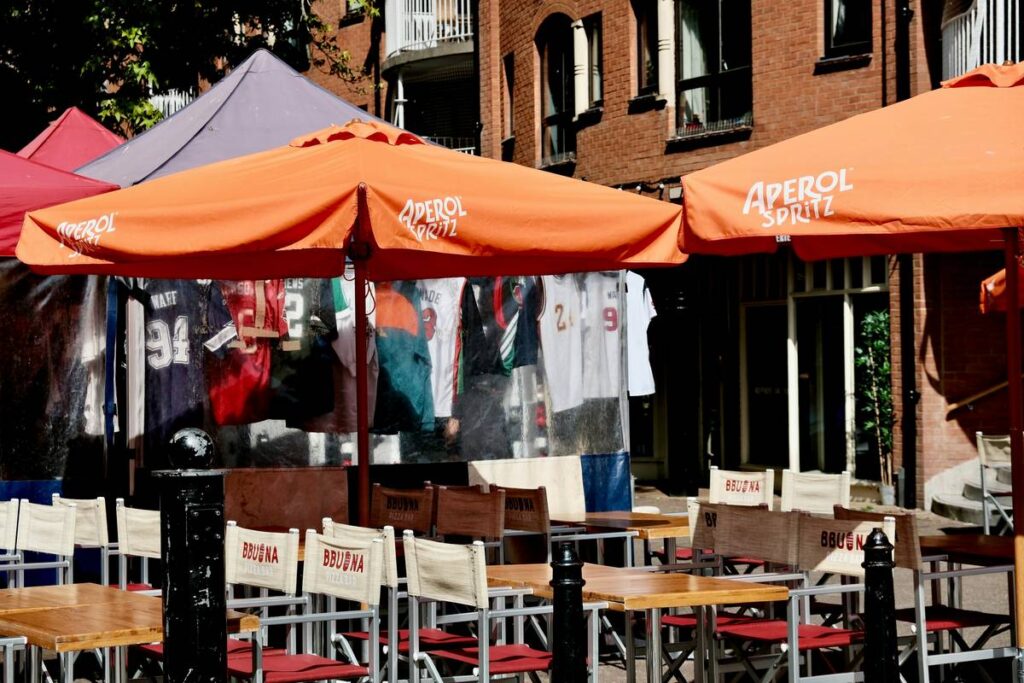
Wind flips it. Sun fades it. Rust eats the frame. You spent good money on an outdoor patio market umbrella, only to watch it collapse or bleach into a ghost of its former self by midsummer. The frustration is real—and avoidable. Here’s how to choose, install, and maintain one that actually lasts.
Most outdoor patio market umbrellas fail because they’re designed for show—not survival
Manufacturers prioritize aesthetics and low cost over engineering. That powder-coated aluminum pole? Thin-walled. The canopy fabric? Cheap polyester masquerading as “solution-dyed acrylic.” And the base? Often an afterthought—lightweight plastic masquerading as stability.
But here’s the catch: durability isn’t accidental. It’s baked in—or left out—at the design stage. Most buyers never check wind ratings, fabric UV resistance, or base weight minimums. They pick what looks pretty in the showroom. Big mistake.
How to Select and Install a Market Umbrella That Survives Real Weather
Prioritize frame material over color
Aluminum resists rust—but not all aluminum is equal. Look for wall thickness ≥1.5mm. Steel frames? Only if hot-dip galvanized and powder-coated. Avoid anything with visible weld seams that aren’t ground smooth—they’re stress points waiting to crack.
Choose fabric like you’re outfitting a sailboat
Solution-dyed acrylic (like Sunbrella®) isn’t just a brand name—it’s a performance standard. The pigment is embedded in the fiber, not painted on. Fade resistance? 10+ years. Water repellency? Built-in. Polyester? Fades in 12–18 months under full sun. The math is simple: pay more now or replace every other summer.
Nail the base weight—no compromises
For a standard 9-foot canopy, you need at least 70 lbs of base weight. Wind doesn’t negotiate. A flimsy cross-base might look sleek, but it’ll tip in 20 mph gusts. Sand-filled resin bases or cast iron are your allies. And forget those “integrated table” setups unless your table weighs 100+ lbs.
| Canopy Size | Minimum Base Weight | Recommended Frame Material | Ideal Fabric Type |
|---|---|---|---|
| 7.5 ft | 50 lbs | Aluminum (≥1.2mm) | Solution-dyed acrylic |
| 9 ft | 70–90 lbs | Aluminum (≥1.5mm) or Galv. Steel | Solution-dyed acrylic |
| 11 ft+ | 100+ lbs | Heavy-gauge steel or marine-grade aluminum | High-denier acrylic blend |
The industry secret: tilt mechanisms are the weak link
Here’s what no catalog tells you—the tilt function fails before the fabric fades. Crank systems jam. Pulley ropes snap. Collar-tilt joints corrode shut. Why? Because they add moving parts to an environment that hates complexity. Salt air. Dust. Moisture. Heat expansion.
Many pros skip tilt entirely. They position the umbrella once—angled slightly west to counter afternoon sun—and lock it down. No gears. No cables. Just a solid, fixed mount. Fewer parts = fewer failure points. If you must have tilt, insist on stainless steel hardware and sealed bearings. And lubricate it twice a year—seriously.
Frequently Asked Questions
Can I leave my outdoor patio market umbrella open overnight?
No. Wind can gust unexpectedly. Always close and secure it when not in use—especially if rain or storms are forecast.
How often should I clean the canopy?
Rinse monthly with a garden hose. Deep-clean every 6 months using mild soap and a soft brush. Never pressure-wash—it degrades fabric coatings.
Are wooden market umbrellas durable?
Only if the wood is teak or marine-grade eucalyptus, fully sealed, and kept under cover when not in use. Otherwise, they warp and crack fast.